

TLDR
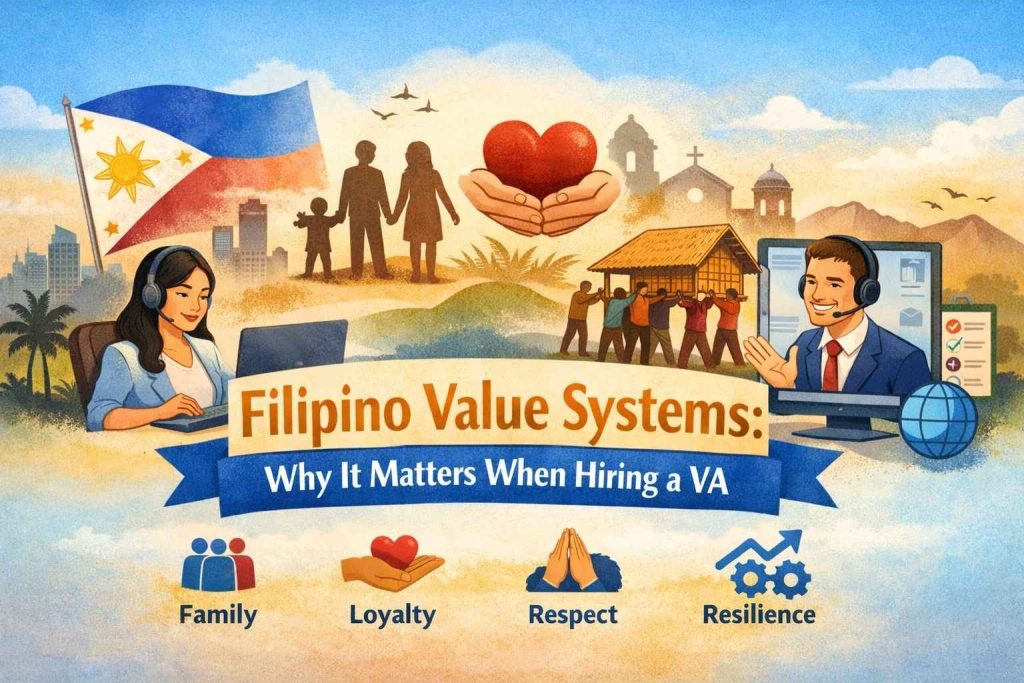
Filipino Value Systems are built on respect, family responsibility, loyalty, and community. These values directly influence how Filipino virtual assistants communicate, handle accountability, and commit long term.
Employers who understand Filipino Value Systems hire smarter, retain longer, and build stronger remote teams.
If you want consistency and loyalty in a virtual assistant, cultural awareness is not optional. It is a competitive advantage.
Table of Contents
What Are Filipino Value Systems?
When people talk about Filipino Value Systems, they are referring to the deeply rooted beliefs and cultural norms that guide behavior in everyday life. These values are not just social. They influence how Filipinos approach work, authority, teamwork, and responsibility.
Unlike many Western cultures that emphasize independence and individual success, Filipino Value Systems are highly relational. Family, community, respect, and social harmony are central. Work is often seen not just as personal ambition, but as a responsibility to support loved ones.
Understanding this difference changes how you lead and manage Filipino virtual assistants.
Historical and Cultural Foundations
Filipino culture has been shaped by centuries of indigenous traditions, Spanish influence, American systems, and strong family-centered communities. The result is a unique blend of Western familiarity and Asian collectivist values.
This cultural mix explains why Filipino professionals often communicate comfortably in English while still operating within relational and respectful social norms.
Influence of Family, Faith, and Community
Family is not just important in the Philippines. It is foundational. Many Filipino professionals work not only for themselves but to support parents, siblings, or children.
Faith and community also play strong roles. Many Filipino Value Systems prioritize humility, patience, gratitude, and service to others. These traits carry into the workplace in powerful ways.
Core Filipino Value Systems That Shape Workplace Behavior
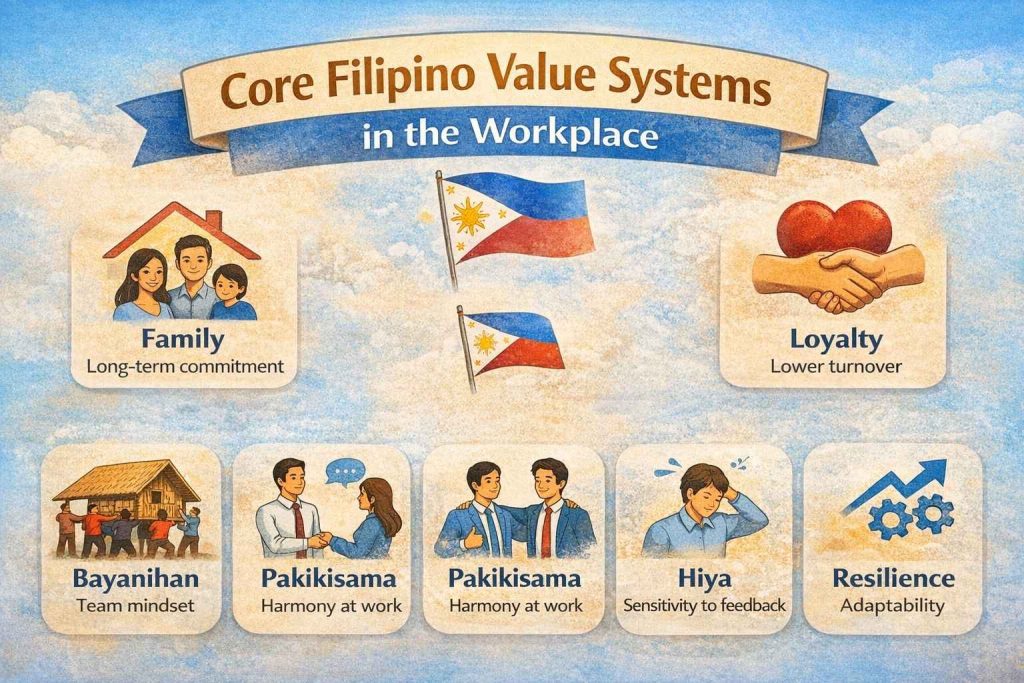
To hire effectively, you need to understand how Filipino Value Systems show up on the job.
Family Orientation and Responsibility
For many Filipino virtual assistants, work is tied directly to family stability. Providing consistent income matters deeply.
This often leads to high levels of dedication. When a Filipino VA values a stable role, they are not casually looking to jump ship for small pay increases. Stability means security for their family.
Respect for Authority and Professional Hierarchy
Respect is central in Filipino Value Systems. Employees may address you formally and avoid open disagreement out of politeness.
This does not mean they lack opinions. It means they were raised to value hierarchy and avoid confrontation. Smart employers create safe spaces for feedback so great ideas are not left unsaid.
Utang na Loob (Debt of Gratitude)
Utang na loob is a powerful concept within Filipino Value Systems. It reflects a deep sense of gratitude toward someone who has helped you.
In a work context, when an employer provides stability, mentorship, or opportunity, loyalty often follows. This is one reason many employers experience long-term retention with Filipino hires.
Bayanihan (Community Support and Teamwork)
Bayanihan represents collective effort. It reflects the willingness to help others for the good of the group.
In remote teams, this translates into collaboration and a service mindset. Filipino VAs often step in to support team members and clients beyond strict job descriptions.
Pakikisama (Harmony and Relationship Building)
Pakikisama emphasizes getting along and maintaining harmony.
Filipino professionals typically avoid conflict and aim to keep working relationships smooth. This makes them pleasant team members, though it requires managers to proactively invite honest feedback.
Hiya (Sense of Dignity and Social Awareness)
Hiya relates to maintaining dignity and avoiding embarrassment. In the workplace, this may show up as hesitation to admit confusion or mistakes.
Clear communication and reassurance go a long way here. When trust is established, performance often increases significantly.
Resilience and Adaptability
The Philippines faces frequent natural disasters and economic challenges. Resilience is part of everyday life.
This resilience is one of the most underrated Filipino Value Systems. Filipino VAs are often adaptable, patient, and steady under pressure.
How Filipino Value Systems Show Up in Virtual Assistant Roles
Understanding theory is helpful. Seeing how Filipino Value Systems translate into actual performance is even more important.
Reliability and Consistency in Daily Tasks
Filipino virtual assistants often take deadlines seriously. Showing up consistently is part of professional pride.
When expectations are clear, they aim to meet them without drama or excuses.
Loyalty and Long-Term Commitment to Employers
Retention is one of the biggest advantages of hiring in the Philippines. Filipino Value Systems place importance on long-term relationships.
Employers who treat their VAs with fairness and respect often build partnerships that last years.
Service-Oriented Mindset and Client Care
The service mindset is strong. Whether handling customer support, admin work, or creative tasks, many Filipino VAs approach their roles with a desire to help and represent their employer well.
Attention to Detail and Accountability
Because work reflects not just on the individual but on their family and reputation, there is often a strong desire to perform well and avoid mistakes.
Cultural Nuances Employers Should Understand Before Hiring
Filipino Value Systems are strengths. They produce loyalty, professionalism, and harmony. But they also require thoughtful leadership.
When employers misunderstand cultural differences, small communication gaps can turn into performance issues. When they understand them, those same differences become advantages.
For a deeper breakdown of how these cultural traits show up in real work environments, read our guide on Filipino work culture and what employers should expect.
Here are the nuances that matter most.
Indirect Communication and Politeness
Filipino professionals often communicate more indirectly than Western employees. This is rooted in Filipino Value Systems that prioritize harmony, respect, and avoiding embarrassment.
Direct criticism, blunt phrasing, or overly aggressive feedback can feel uncomfortable, even if the intention is constructive. That discomfort does not mean your VA cannot handle feedback. It simply means tone matters.
Clear yet respectful communication works best. Instead of saying:
“This is wrong. Fix it.”
Try:
“Let’s adjust this section to better match the goal. Here’s what I’d like changed.”
The message is the same, but delivery preserves dignity. When dignity is preserved, trust grows.
Hesitation to Disagree with Authority
Respect for hierarchy is a core part of Filipino Value Systems. Because of this, some Filipino virtual assistants may hesitate to challenge instructions, even if they see a better solution.
This can lead to situations where tasks are completed exactly as instructed, even when minor adjustments could improve results.
Smart employers remove this barrier intentionally.
Make it explicit that input is welcome. Say things like:
“If you ever see a better way to do this, I’d really like to hear your thoughts.”
Over time, your VA will gain confidence sharing ideas. Many Filipino professionals are highly capable problem-solvers. They simply need permission to step outside traditional hierarchy norms.
Saying Yes to Avoid Conflict
In Filipino Value Systems, maintaining harmony is important. Because of this, “yes” sometimes means “I understand what you’re saying,” not necessarily “I can execute this exactly as described.”
This is not dishonesty. It is often an attempt to avoid disappointing you or creating friction.
The solution is simple: follow up with clarity.
Instead of asking, “Can you do this by Friday?” ask:
“What steps will you take to complete this by Friday?”
This invites confirmation of understanding and execution plan. It prevents misalignment before it becomes a missed deadline.
Feedback Sensitivity and Constructive Criticism
Because concepts like hiya relate to dignity and social perception, public criticism can feel especially uncomfortable.
If correction is needed, handle it privately whenever possible. Public praise and private correction is a strong leadership rule in any culture, but it carries particular weight here.
When handled respectfully, Filipino professionals are extremely coachable and eager to improve.
Building Trust Before Peak Performance
Trust is central to Filipino Value Systems. Many Filipino VAs perform well immediately, but their best performance often comes after trust is established.
When they feel secure, respected, and valued, initiative increases. Creativity increases. Ownership increases.
If early communication feels slightly reserved, do not mistake it for lack of capability. It is often simply professionalism and caution while the relationship is still forming.
Strong leadership shortens that adjustment period.
Comparing Filipino Value Systems to Western Work Culture
Understanding contrast helps you lead better.
Individualism vs Collectivism
Western cultures often emphasize personal achievement. Filipino Value Systems emphasize collective success and family responsibility.
This means recognition and appreciation often resonate deeply.
Direct vs Indirect Communication Styles
Western communication can be blunt. Filipino communication tends to preserve harmony.
Bridging this gap requires awareness, not judgment.
Job Mobility vs Long-Term Loyalty
In many Western markets, frequent job changes are normal. In the Philippines, long-term stability is often preferred.
This is a retention advantage if you build trust.
Why Understanding Filipino Value Systems Leads to Better Hiring Decisions
Cultural awareness improves everything. When you understand Filipino Value Systems, you stop managing blindly and start leading intentionally. You communicate more clearly, onboard more effectively, and build trust faster.
Hiring decisions are not just about skills. They are about alignment. And cultural alignment is often the difference between a short-term hire and a long-term asset.
If you’re ready to apply these insights and build a long-term remote team, read our step-by-step guide on how to hire a virtual assistant in the Philippines without using an agency.
Improved Onboarding and Training
When you understand Filipino Value Systems, onboarding becomes smoother and more predictable.
You recognize that communication may be indirect at first. You anticipate hesitation around asking too many clarifying questions. You understand the importance of tone when giving feedback.
Because of this awareness, you provide clearer instructions. You create safer channels for questions. You proactively confirm understanding.
Instead of confusion, you get clarity. Instead of early frustration, you get steady progress.
Cultural understanding shortens the learning curve.
Higher Retention and Lower Turnover
Employers who respect Filipino Value Systems often experience multi-year working relationships.
Stability, loyalty, and family responsibility are deeply embedded cultural drivers. When Filipino virtual assistants find consistent work with respectful leadership, they are less likely to leave for minor pay differences.
Retention is not just about compensation. It is about trust, predictability, and long-term opportunity.
When you build a work environment that aligns with Filipino values, turnover decreases naturally.
Stronger Employer-Employee Relationships
Trust builds faster when cultural differences are acknowledged and appreciated.
Filipino Value Systems emphasize respect, gratitude, and harmony. When employers lead with clarity and appreciation, Filipino professionals often respond with loyalty and commitment.
This creates a positive cycle:
Clear expectations
Consistent performance
Mutual respect
Long-term stability
Over time, your VA stops feeling like a contractor and starts feeling like a true team member.
And that is when productivity really increases.
Practical Tips for Employers Hiring Filipino Virtual Assistants
Understanding Filipino Value Systems is only useful if you apply it. Cultural awareness should change how you onboard, communicate, and lead. When you adjust your management style to align with Filipino values like respect, loyalty, and harmony, you will see better performance and stronger retention.
Here is how to do that in practice.
Set Clear Expectations Early
Clarity prevents confusion, especially when working across cultures and time zones.
Because Filipino Value Systems emphasize respect for authority, many Filipino virtual assistants will assume you know exactly what you want. If instructions are vague, they may hesitate to ask too many follow-up questions out of politeness.
Be specific from day one. Outline:
- Responsibilities and deliverables
- Deadlines and turnaround expectations
- Communication channels and response times
- Working hours and availability
The more precise you are, the more confidently your VA can execute. Clear direction creates psychological safety and improves performance quickly.
Encourage Open Communication
Many Filipino professionals were raised in environments where disagreement with authority is handled carefully. That respect is a strength, but it can sometimes limit feedback.
Make it explicit that you want input.
Instead of asking, “Does that make sense?” try asking, “What questions do you have?” or “Is there a better way we could approach this?”
When you consistently invite feedback, your VA will become more comfortable sharing ideas. Over time, you will unlock creativity and initiative that might otherwise stay hidden.
Strong communication builds trust, and trust strengthens loyalty, which is central to Filipino Value Systems.
Recognize Effort and Show Appreciation
Acknowledgment goes a long way in any culture, but it carries particular weight within Filipino Value Systems.
Because work is often tied to family responsibility and personal pride, recognition reinforces motivation. A simple message like, “You handled that client situation really well,” can have lasting impact.
Appreciation does not need to be dramatic. It just needs to be consistent and genuine.
When Filipino professionals feel valued, loyalty deepens. Retention improves. Effort increases.
Provide Stability and Long-Term Opportunities
Many Filipino virtual assistants prioritize stability over constant job switching. Filipino Value Systems place high importance on providing for family and maintaining dependable income.
If you offer consistent hours, predictable pay, and growth opportunities, you position yourself as a long-term partner rather than a temporary client.
This does not mean you must guarantee lifetime employment. It means communicating clearly about long-term plans when possible.
When your VA sees a future with you, they are far more likely to invest deeply in your business.
Filipino Value Systems and Long-Term Remote Partnerships
When you combine cultural awareness with respectful leadership, you create something powerful.
Filipino Value Systems support loyalty, service, resilience, and commitment. Those qualities are ideal for long-term remote partnerships.
This is why so many global companies continue hiring in the Philippines year after year.
How RemoteWork.ph Aligns with Filipino Value Systems
Understanding Filipino Value Systems is one thing. Hiring in a way that respects and supports those values is another.
At RemoteWork.ph, our platform is built around long-term, direct relationships between employers and Filipino professionals. That structure naturally aligns with Filipino Value Systems that prioritize stability, loyalty, and mutual respect.
When you remove middlemen and create direct communication, you give both sides the opportunity to build trust. That trust is where performance and retention really grow.
Built for Long-Term Partnerships, Not Short-Term Gigs
Many Filipino virtual assistants prefer consistent, stable roles where they can grow over time. This fits directly with Filipino Value Systems that value commitment and responsibility.
RemoteWork.ph was designed for employers who want dedicated team members, not temporary freelancers cycling through projects. Employers can hire directly, pay directly, and build real working relationships without commission layers interfering.
That stability supports what matters most in Filipino culture: family security, professional pride, and long-term trust.
Respectful, Direct Communication from Day One
Filipino Value Systems emphasize respect and professionalism. On RemoteWork.ph, employers and job seekers communicate directly from the start, which allows expectations to be clear and relationships to develop naturally.
When employers understand cultural nuances and lead with clarity and appreciation, Filipino professionals respond with loyalty and consistency.
A Platform That Values Filipino Professionals
We believe Filipino talent deserves direct access to global employers without unnecessary fees or salary markups. When workers keep 100 percent of what they earn, it reinforces dignity and fairness.
That respect matters. It aligns with Filipino Value Systems centered on gratitude, responsibility, and pride in one’s work.
If you want to build a reliable remote team that lasts, hiring through a platform that understands Filipino culture is not just helpful. It is essential.
Key Takeaways
• Filipino Value Systems are rooted in family, respect, loyalty, and community
• These values directly influence work ethic, communication, and retention
• Cultural awareness improves onboarding, performance, and long-term success
• Filipino virtual assistants thrive in stable, respectful environments
• Employers who understand Filipino Value Systems gain a real hiring advantage
If you want more insight into workplace dynamics, read our guide on Filipino work culture to deepen your understanding and hire with confidence.
When you understand culture, you hire smarter.