If you’re wondering how to pay a virtual assistant from the Philippines, you’re not alone. After hiring a Filipino VA, one of the first challenges business owners face is choosing the right payment method, avoiding unnecessary fees, and making sure payments arrive quickly and reliably.
Paying your virtual assistant correctly is more than just sending money. The payment process you set up directly affects trust, retention, and your long-term working relationship. When payments are clear, consistent, and easy to receive, your VA can focus on helping your business grow instead of worrying about delays or unexpected deductions.
In this guide, you’ll learn exactly how to pay a virtual assistant from the Philippines, including the best payment platforms, how often to pay, typical costs to expect, and simple best practices that make payments smooth for both you and your VA.
TL;DR: How to pay a virtual assistant from the Philippines
If you’re wondering how to pay a virtual assistant from the Philippines, the goal is simple: pay on time, keep fees low, and make it easy for your VA to receive money in pesos.
- Best overall: Wise (low fees, good exchange rates, fast transfers)
- Best for convenience: PayPal (easy, but usually higher fees and weaker exchange rates)
- Good alternative: Payoneer (solid for freelancers, helpful payout options)
- Best for cash pickup: Western Union (usually more expensive, better for emergencies)
- Great remittance option: Remitly (competitive, easy for PH recipients)
Most teams do bi-weekly or monthly pay, then add a clear process for timesheets, invoices (even simple ones), and payment confirmation. If you want to build trust fast, pick one method, stick to a schedule, and communicate it clearly.
Table of Contents
Things to Consider
When learning how to pay a virtual assistant from the Philippines, several factors come into play that can influence how you manage payments. First, it’s important to understand the cost of living and standard salary expectations in the Philippines.
The cost of living is significantly lower compared to Western countries, which means you can offer competitive rates that are both fair to the VA and economical for your business. Additionally, it’s essential to consider the method of payment. Different platforms offer various benefits and fees, so choosing the right one can save both parties money and hassle.
Another critical aspect is understanding the cultural context. Filipino workers value stability and consistency, so setting clear expectations about payment frequency and amounts is vital.
Moreover, being aware of cultural work norms such as the 13th month pay (discussed at the end of this article), can help you build a better working relationship and avoid potential misunderstandings. Taking these considerations into account will help ensure a smooth and mutually beneficial working arrangement.
How much should you pay your Filipino Virtual Assistant?
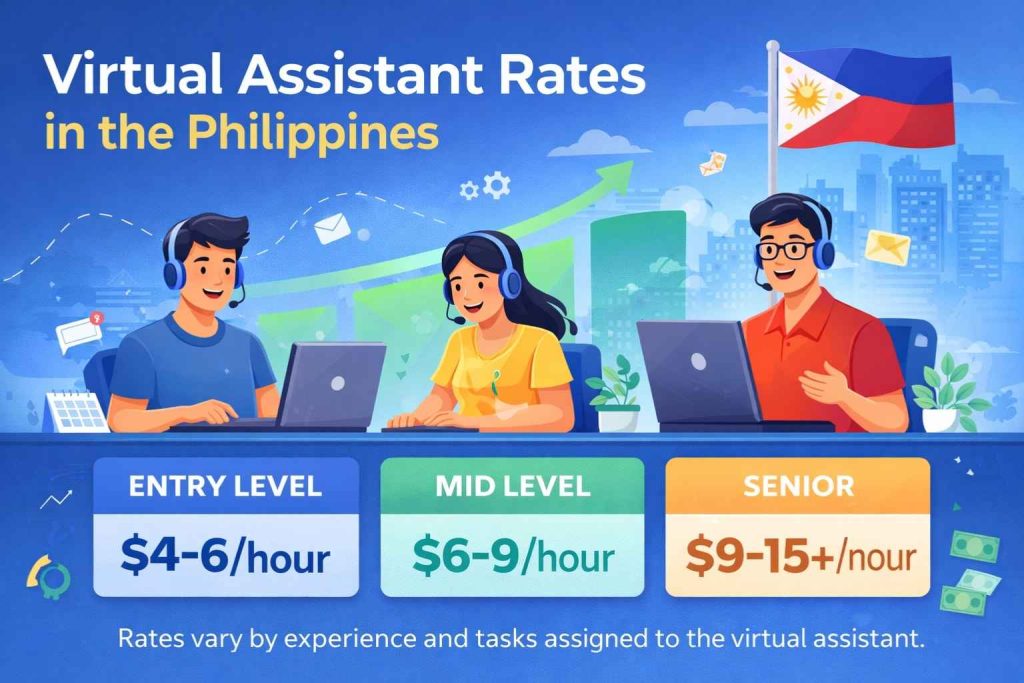
Determining the appropriate salary for your Filipino virtual assistant involves several factors. On average, VAs in the Philippines earn between $400 to $800 per month for full-time work.
However, the exact amount can vary based on the VA’s experience, skills, and the complexity of the tasks they are handling. For instance, a VA handling basic administrative tasks might earn less compared to one with specialized skills like digital marketing or graphic design.
It’s also worth considering the benefits of offering bonuses or incentives. Providing performance-based bonuses can motivate your VA to exceed expectations and contribute more effectively to your business.
Read our complete guide on Virtual Assistant Rates.
How often should you pay your Filipino Virtual Assistant?
The payment frequency for your Filipino virtual assistant can significantly impact their financial stability and job satisfaction.
Most VAs prefer to be paid bi-weekly or monthly. Bi-weekly payments offer more frequent financial support, which can be especially beneficial for VAs managing household expenses or personal commitments. Monthly payments, on the other hand, can simplify accounting processes for both you and your VA.
When deciding on the payment schedule, it’s essential to communicate clearly with your VA and agree on a timeframe that works for both parties. Consistency is key, so once you establish a payment schedule, make sure to adhere to it diligently. Regular and timely payments foster trust and reliability, which are cornerstones of a successful working relationship.
Things to consider before you pay your Filipino VA
Before choosing an app, get clear on the basics. When people struggle with how to pay a virtual assistant from the Philippines, it’s usually because one of these wasn’t decided upfront.
Currency: USD or PHP?
Decide whether you’re paying your VA in USD or in Philippine pesos (PHP). Many VAs prefer PHP for stability, but some prefer USD. Either is fine, just be clear. If you pay in USD, confirm how conversion will work on their side.
Fees and exchange rates (who covers them?)
Payment platforms make money through fees and exchange rates. Agree on who covers those costs. My recommendation is simple: you cover fees whenever possible. It keeps pay predictable and avoids awkward “I received less than expected” conversations.
Hourly vs monthly pay
If your VA is hourly, you need a clear time-tracking rule (even a simple spreadsheet works). If your VA is monthly, define what “full-time” means (hours per week, availability, and expected turnaround time).
My recommended process: how to pay a virtual assistant from the Philippines (step-by-step)
If you want the least stressful way to handle how to pay a virtual assistant from the Philippines, here’s a simple setup you can follow.
Step 1: Agree on the pay schedule in writing
Decide weekly, bi-weekly, or monthly, then lock in the exact days (example: “paid every other Friday”).
Step 2: Set the pay rules (so there’s no confusion later)
Confirm:
- Rate (hourly or monthly)
- Currency (USD or PHP)
- Who covers fees
- Any bonuses or performance incentives
- Whether you offer 13th month pay
Step 3: Use one primary payment method
Pick one method as the default (I recommend Wise), then choose one backup method for emergencies.
Step 4: Confirm receipt every payday
A quick message like: “Just sent your payment, please confirm once it hits your account” prevents issues from dragging out for days.
How to Pay a Virtual Assistant from the Philippines
Once you’ve decided which tasks to outsource to a virtual assistant, setting up a clear payment process is the next step.
There are several reliable methods on how to pay a virtual assistant from the Philippines. Each option has its pros and cons, so it’s important to choose the one that best suits your needs and preferences. Here are some popular payment methods you can choose from, starting with our top recommendation:
Wise (formerly TransferWise) – Our Recommendation

Wise is my top pick for how to pay a virtual assistant from the Philippines because it’s usually the best mix of low fees, strong exchange rates, and speed.
Best ways your VA can receive money with Wise
- Direct to their bank account
- To a Wise account they control
- In many cases, to popular PH options like GCash (depending on what Wise supports in your region at the time)
If you want your VA to keep more of their pay, Wise is hard to beat.
PayPal: convenient, but watch the fees

PayPal is easy and familiar, which is why many people use it for how to pay a virtual assistant from the Philippines.
The downside is you’ll often pay more in fees and your VA may lose money on conversion.
When PayPal makes sense
- One-off payments
- Short-term projects
- When your VA strongly prefers it and understands the tradeoff
If you do use PayPal, clarify upfront whether you’re sending as a “goods and services” payment and how fees will be handled.
Payoneer: a strong alternative for freelancers

Payoneer can work well for how to pay a virtual assistant from the Philippines, especially if your VA is used to freelancing platforms or wants more payout flexibility.
When Payoneer is a great fit
You want an alternative to PayPal with better exchange options in many cases
Your VA already has Payoneer set up
Direct Bank Transfer

Direct bank transfers are a straightforward way to pay your VA, especially if they have a bank account in the Philippines.
While this method can be convenient, it’s essential to be aware of the fees involved. International bank transfers can incur significant charges, and exchange rates might not be as favorable as those offered by specialized platforms like Wise or Payoneer.
Western Union

Western Union is a well-known option for sending money internationally and another great option on how to pay a virtual assistant from the Philippines. It offers the advantage of cash pick-up, which can be useful if your VA prefers to receive their payment in cash.
However, Western Union’s fees can be relatively high, and the exchange rates might not be as competitive. It’s best suited for one-off payments rather than regular salary transfers.
Remitly

Remitly is a popular choice for remittances to the Philippines. It offers various transfer options, including bank deposits and cash pick-up.
Remitly’s fees and exchange rates are competitive, and the platform is known for its speed and reliability. It’s a good option for regular payments, providing a balance of cost and convenience.
GCash and Maya (popular in the Philippines)
Many Filipino VAs use GCash or Maya day-to-day. Even if you pay through Wise or another service, it helps to understand these because your VA may move money there after receiving it.
What to ask your VA
- Do you prefer bank transfer or e-wallet?
- If e-wallet, which one do you use most: GCash or Maya?
- Do you want to be paid in PHP or USD?
This makes your process for how to pay a virtual assistant from the Philippines feel “local” and thoughtful.
Common mistakes when paying a Filipino virtual assistant
If you want to avoid headaches with how to pay a virtual assistant from the Philippines, avoid these:
Not agreeing on fees and exchange rates
This is the #1 reason VAs feel underpaid even when the salary is fair.
Paying randomly instead of on a schedule
Consistency builds trust faster than almost anything else.
Using “friends and family” to avoid fees
It can create risk and confusion. Pay in a way that keeps both sides protected and clear.
Cultural Work Norms
When learning how to pay a virtual assistant from the Philippines, understanding cultural work norms is crucial.
One significant aspect is the 13th month pay, which is a mandatory benefit in the Philippines. If you are not a business located in the Philippines, you are not required to pay this, although most Filipino VA’s will greatly appreciate it and may even expect this as it is the norm in their country.
This additional month’s salary is typically given at the end of the year and is highly valued by Filipino workers. Keep the 13th pay in mind when negotiating their salary and make it clear whether you will or will not pay them this 13th month before they start working for you.
Another cultural norm to be aware of is the importance of respect and personal relationships. Filipinos place a high value on harmonious working relationships and showing respect to colleagues and superiors.
Simple gestures like addressing your VA politely, acknowledging their hard work, and showing appreciation can go a long way in building a positive working environment. Additionally, understanding and respecting local holidays and customs can help you connect better with your VA and foster a more collaborative relationship.
13th Month Pay
The 13th month pay is an important part of the employment landscape in the Philippines. It’s a mandatory (in the Philippines) benefit that provides employees with an additional month’s salary, usually paid out in December. This practice is intended to help workers with holiday expenses and is highly anticipated by employees.
If you are not a company in the Philippines, then you are not legally required to pay this 13th month, although many Filipino workers will expect it. So definitely discuss this with your Virtual Assistant while negotiating their salary and decide if you will or will not provide this 13th month payment at the end of the year.
If you do decide to pay the 13th month which we highly recommend you do, it can enhance the VA’s satisfaction, loyalty, and even performance when working for you.
Other Cultural Work Norms
Beyond the 13th month pay, several other cultural work norms can impact your relationship with your Filipino VA. For example, the concept of “utang na loob” or debt of gratitude is deeply ingrained in Filipino culture.
This means that Filipinos often feel a strong sense of loyalty and obligation to those who have helped them. By treating your VA with respect and fairness, you can foster a sense of mutual loyalty and commitment.
Another important cultural aspect is “pakikisama” or smooth interpersonal relationships. Filipinos value harmony and avoid confrontation. They appreciate a collaborative and supportive working environment where their contributions are acknowledged and respected. Understanding these cultural nuances can help you create a positive and productive working relationship with your VA.
Read more about Filipino cultural norms here.
Remember, clear communication and consistency are essential when figuring out how to pay a virtual assistant from the Philippines. By treating your VA with respect and understanding, you’ll not only fulfill their financial needs but also cultivate a loyal and motivated team member who can greatly contribute to your business’s success for years to come.
Key takeaways
- If you want the simplest answer to how to pay a virtual assistant from the Philippines, use Wise and pay bi-weekly or monthly.
- Always agree on currency (USD or PHP), fees, and who covers them before your VA starts.
- Send payment the same day each cycle and keep proof (receipt, transfer confirmation, screenshot).
- Use a basic system: time tracking (if hourly), a simple invoice, and a payment confirmation message.
- Clarify expectations around 13th month pay early so there are no surprises in December.
- Consistency beats perfection. Most payment issues come from unclear expectations, not the payment app.
Frequently Asked Questions
What is the best way to pay a virtual assistant from the Philippines?
The best way to pay a virtual assistant from the Philippines depends on your specific needs and preferences. Wise (formerly TransferWise) is highly recommended due to its low fees and favorable exchange rates. PayPal, Payoneer, and Remitly are also popular options, each with its own advantages.
How much should I pay my Filipino virtual assistant?
The salary for a Filipino virtual assistant can range from $400 to $800 per month for full-time work, depending on their skills and experience. It’s important to offer a fair and competitive rate that reflects the complexity of the tasks they are handling.
How often should I pay my Filipino virtual assistant?
Most virtual assistants prefer to be paid bi-weekly or monthly. It’s essential to establish a consistent payment schedule that works for both parties and adhere to it diligently.
What is the 13th month pay?
The 13th month pay is a mandatory benefit in the Philippines, providing employees with an additional month’s salary, typically paid out in December. It is highly valued by Filipino workers and demonstrates the employer’s commitment to their well-being.
Are there any cultural considerations I should be aware of when working with a Filipino virtual assistant?
Yes, understanding cultural norms such as respect, personal relationships, and the importance of the 13th month pay is crucial. Filipinos value harmonious working relationships and appreciate a supportive and respectful working environment.
Read our complete FAQ page here
If you want a complete step-by-step guide on how to hire a virtual assistant in the Philippines, I put together a full breakdown that covers hiring direct, managing your VA, and avoiding agency fees.
More helpful articles:
- Virtual Assistant Rates
- Is RemoteWork.ph Legit?
- 20 Non-Working Holidays in the Philippines
- SEO experts in the Philippines
- Offshoring Philippines: What you need to know
- Is outsourcing good for the Philippines?